Although we are not technically on summer vacation yet, we still tried to enjoy the first official weekend of summer to its fullest.
Happy Memorial Day, everyone!

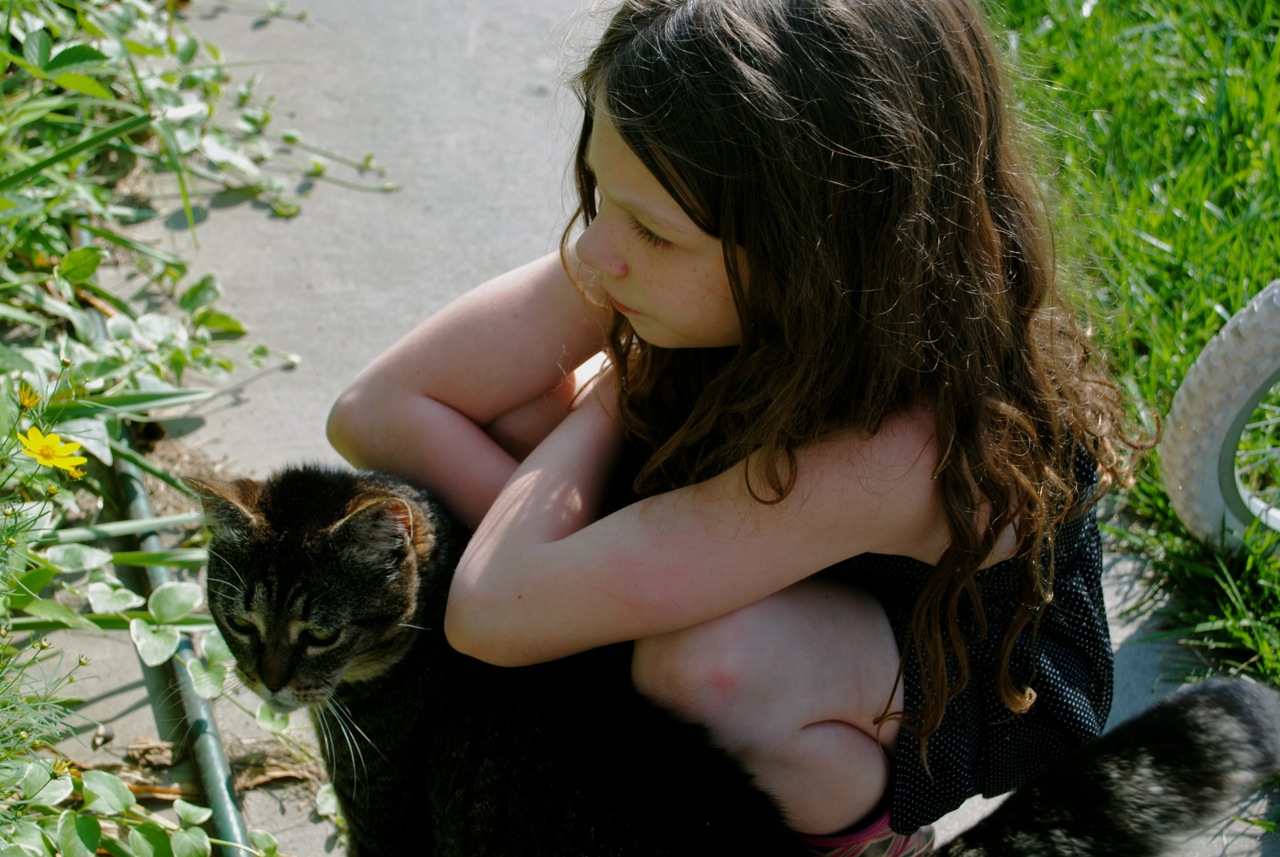






Although we are not technically on summer vacation yet, we still tried to enjoy the first official weekend of summer to its fullest.
Happy Memorial Day, everyone!
Right now the garden is bursting with all manner of leafy greens. Lettuces, kale, spinach. Even the beet greens are beginning to cry for picking. SO many greens, so little time!

This week we are still enjoying an overabundance of kale but also we are able to mix things up with the spinach that is beginning to take over. I am rather fond of spinach myself: for all my talk of loving growing and picking kale, I think I may actually prefer the spinach! There’s an unending variety of things you can do with spinach: soups, dips, Spanakopita! I like to use fresh spinach in place of shredded lettuce in my tacos. It does well in a regular ol’ salad, and even better in one with strawberries!
This week I made my go -to dish for any vegetable for which I have too much: risotto. I am a sucker for risottos of all kinds, but my favorite is just a simple white wine and parmesan, plain – as – they- come risotto with some chopped up and sauteed veg thrown in.
To start I gathered a large bunch of spinach from the garden – around the same size as those bundles you see in the produce section of the supermarket. They weigh probably around a pound. It looks like too much, but it cooks down and reduces A LOT.
I like to thoroughly wash my greens, and not because they are dirty. In fact, I am completely sure the greens from my garden are far cleaner than those that have been picked in some other state, loaded onto a truck, driven for miles and miles, loaded onto display and handled by various shoppers.
I clean each leaf because of this:

I don’t want to eat bug litter. You know, if a few little bugs escape my notice and get cooked up, so be it. But wads of webbing? No thank you. A hidden chrysalis? Even worse. But worst of all, this bit of webbing could (and did) conceal this:
Yeah, you’d notice that big guy in your finished meal.
(The risotto I make is pretty common, and a good, detailed recipe can be found HERE.)
So – I thoroughly wash my spinach, and then chop it up with half a yellow onion.

I saute the onion and some garlic in a bit of olive oil until the onion starts to become translucent, and then I add the spinach.

I don’t want to cook the spinach too long – just long enough to wilt it a bit and reduce it somewhat – then I remove it from the heat and transfer the onions and spinach to a warm plate. You don’t want to leave the vegetables in for the entire cooking time or they will overcook and lose a lot of their texture and character. We’ll throw them back in at the end.
Meanwhile, I have a pan of vegetable or chicken stock simmering on the stove on low heat, waiting for its turn to be added to the pot. You want it to be hot when it is added to the rice or it will slow down your cooking time dramatically.
You can use either kind of stock for this recipe – I prefer the richness of the chicken stock, but since my oldest is a vegetarian I tend to use vegetable stock whenever I can.
Next I add a touch more olive oil to the pan that the spinach has just vacated and I add the dry, uncooked rice. The idea is to get it coated in oil and saute it for about 3 or 4 minutes – until it starts to become translucent-ish. Then I give it a good splash of white wine. I tend to be generous here.
Here’s the thing about wine in cooking: I don’t use “cooking wine”. I use straight up, run of the mill, whatever’s on sale wine. I cook with wine fairly frequently so I always keep a couple of bottles of cheap whites and reds around. You don’t have to be as picky with it as you would if you were going to drink it (although sometimes even that super cheap stuff can be very drinkable!).
Once the wine has mostly been absorbed into the rice you can start adding a bit of the simmering broth, a little at a time, waiting for it to be almost all absorbed before adding more.
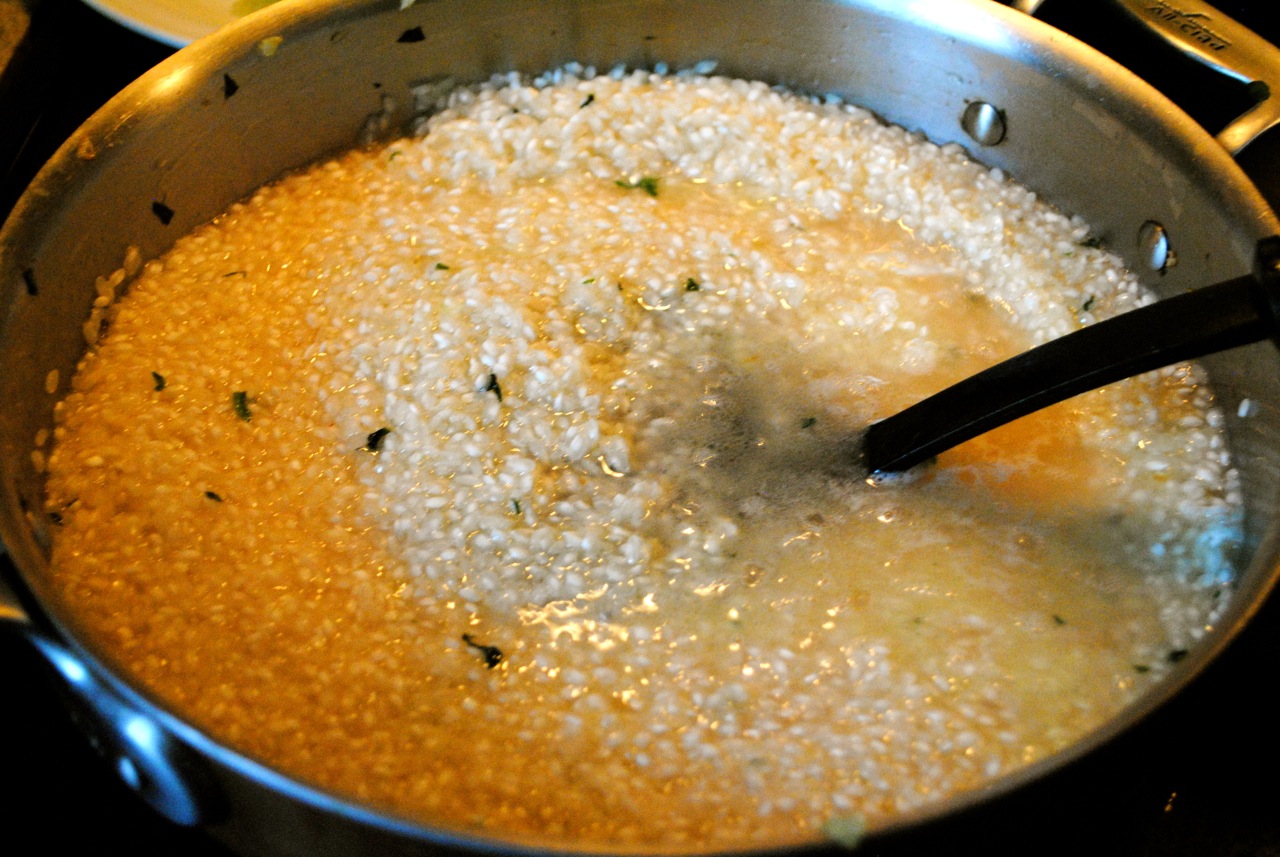
It should take around a half an hour to use up all of your stock and for the rice to become soft. It will start to look almost creamy, and then you know you are ready to finish it up.

At this point you’ll throw your spinach and onions back in along with some parmesan cheese, salt and pepper. Honestly, I tend to add extra parmesan and leave out the salt. If you wanted to you could throw in some steamed and chopped asparagus at this point as well. Artichokes also make a nice addition. Okay, I am making myself very very hungry right now.

Once everything is mixed in and heated through you are ready to serve.
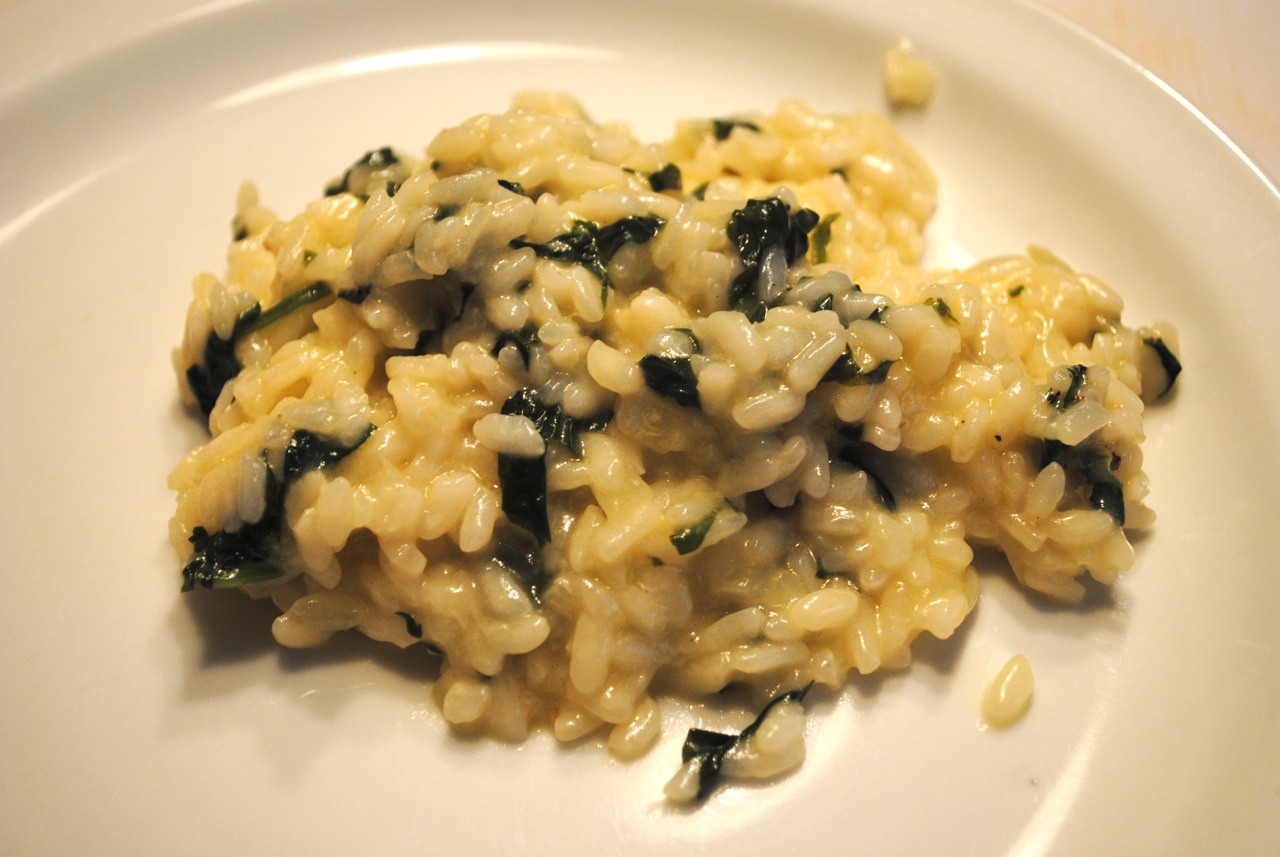
A nice and simple risotto like this can make a fine meal all on its own. Or you can add a fried egg with a runny yolk right on top and make it extra special!
That’s right! This year we have a wooly vegetable garden.
I was lucky enough to be able to grab a bag of skirting after the sheep were sheared at Juniper Moon Farm the other day, and I am thrilled to be using it in the garden.
“Skirting” is the icky bits of the fleece that are so soaked in urine and feces that they cannot be sent to the mill for processing into yarn or roving (such as the wool surrounding the animal’s back end). It’s the waste bits and they are pretty much garbage. Thankfully, they can be composted or used in the garden directly as mulch.
I’ve been using some straw to mulch the areas where I have sown seeds directly into the soil (beets, carrots, onions, chard) and the little sprouts are still fragile so I didn’t use wool there. With some of the hardier squash transplants I have made a light circle of wool around the base and spread out enough to discourage weeds close to the plants.
But where the wool is making the biggest difference for me is at the borders of the beds where the weeds like to encroach and I can’t properly weed-whack them.

The best part is (actually, there are so many “best” parts it’s ridiculous) that the manure-y stuff stuck to the wool will help keep the soil and plants fertilized. AND once the growing season is over you can till the wool mulch right into the soil. See? It’s brilliant!

My garden looks pretty funny and odd right about now – I’ve not completed the mulching process entirely. I have only mulched around the edges a bit and around the current plants that are growing. I have a lot more transplants waiting to go outside once it stays reliably warm enough (tomatoes are pretty delicate and we’re still getting down into the 40’s at night), and once they are in the ground they’ll be mulched with the wool as well.

For now it’s a patchwork of wool, mud and straw. But it’s getting there.
If you’re a farmer (even a small – scale one) you’ll know that spring is the busiest time of the year. Garden patches need tilling, seeds need to be started, coops and run – ins need to be cleaned and aired out for summer, and baby animals need to be prepared for. This year I have felt the busy-ness and anxiety more acutely because we’ve had one of the warmest Marches on record. The bugs have exploded in population and things are sprouting and blooming well in advance of normal.
One of the things keeping me busy (and exhausted) is my new vegetable garden project. I’ve mentioned before I fenced in a plot out front that’s just under 1,000 square feet. Since we have really terrible soil, and since I’ve had issues in the past with too much moisture pooling around the root systems of my plants, I’ve followed the example of Juniper Moon Farm and made raised bed rows to plant in this year. They are raised and rounded so that excess moisture flows off. I have 5 long raised beds to plant in now, thanks to weeks of digging, a load of compost, and a day of tilling.

Right now there are three kinds of onions, Rainbow Chard, two kinds of beets and little finger carrots sprouting out there.
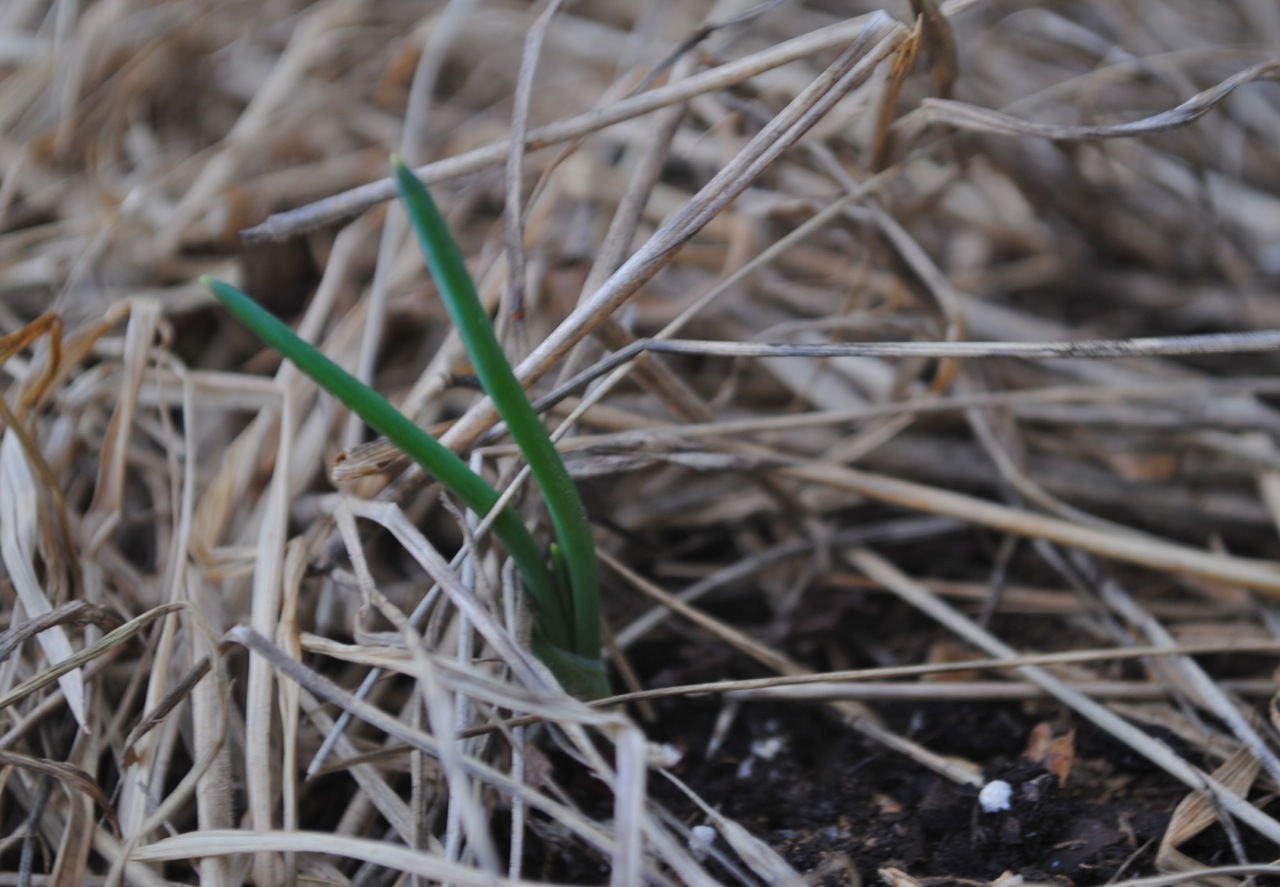
An onion peeking through the straw mulch.
Now that it is April things are getting a little more exciting because it means it is almost our safe window for planting the seedlings we started indoors, such as our tomatoes, squash and herbs.

They’ve had a nice sunny spot in the house waiting to be garden – ready. Soon we’ll be receiving blueberry and raspberry plants that I ordered along with sweet potato and purple potato plants.
If all of this isn’t enough, we’ve got plans for a honeybee hive this spring to help pollinate our plants and increase our vegetable yields, and we have landscapers coming out next week to start clearing our woods for fencing. The goat shed is slowly being cleaned out to be ready for its once and future occupants.
The chickens are in full egg – laying mode and we are seeing about 2 dozen eggs a day now. I’ve been giving eggs away to anyone who’ll take them and even sending dozens off to two local restaurants, and I am still drowning in them. I am thinking I will make a bunch of freezable quiches and cookie doughs one of these days to use up some of the surplus.
Unfortunately we won’t have fresh goat milk this summer – Milkshakes aborted her babies. It turns out she had in fact been bred by the sheep in the fall and was therefore unable to carry the pregnancy. They were tiny, amorphous blobby things that were never meant to live. As I said, goat/sheep crosses aren’t viable.
Most likely I will try to breed her again this fall, for babies and milk next spring.
As you can see it is very busy outside right now in preparation for summer. Once the hot weather hits I hope to be able to spend some time indoors fixing the wallpaper Oona destroyed and touching up paint and other things we’ve been neglecting. But let’s hope the hot doesn’t come around too soon.
Happy first day of spring! I may not be a fan of summer or very-warm weather, but I just adore spring. My sinuses aren’t too thrilled, but that’s another story.

This first of spring is even more exciting and special for me because I am finally seeing the ideas and desires I have held for so long come to fruition. Especially with regards to the new garden.
I’d been wanting to move the vegetable patch closer to the house and make it bigger (with room for a beehive) and so a few weeks back I got outside and started making it happen. I pushed the kids’ giant wooden swingset about 15 feet from where it was (by myself! And yet I wonder why my neck and shoulder is bothering me so much lately??) and started staking out the outline for fencing.
Then I got to work digging. By hand. Again, by myself.
I’d had the idea that we really needed to move things along if I was going to get the early spring seeds and bulbs into the ground. Our only machinery with a tiller attachment is currently down (and ancient). I didn’t have the funds to hire someone to come with a big tractor, so I grabbed a shovel and went to it. The finished area is just under 1,000 square feet.
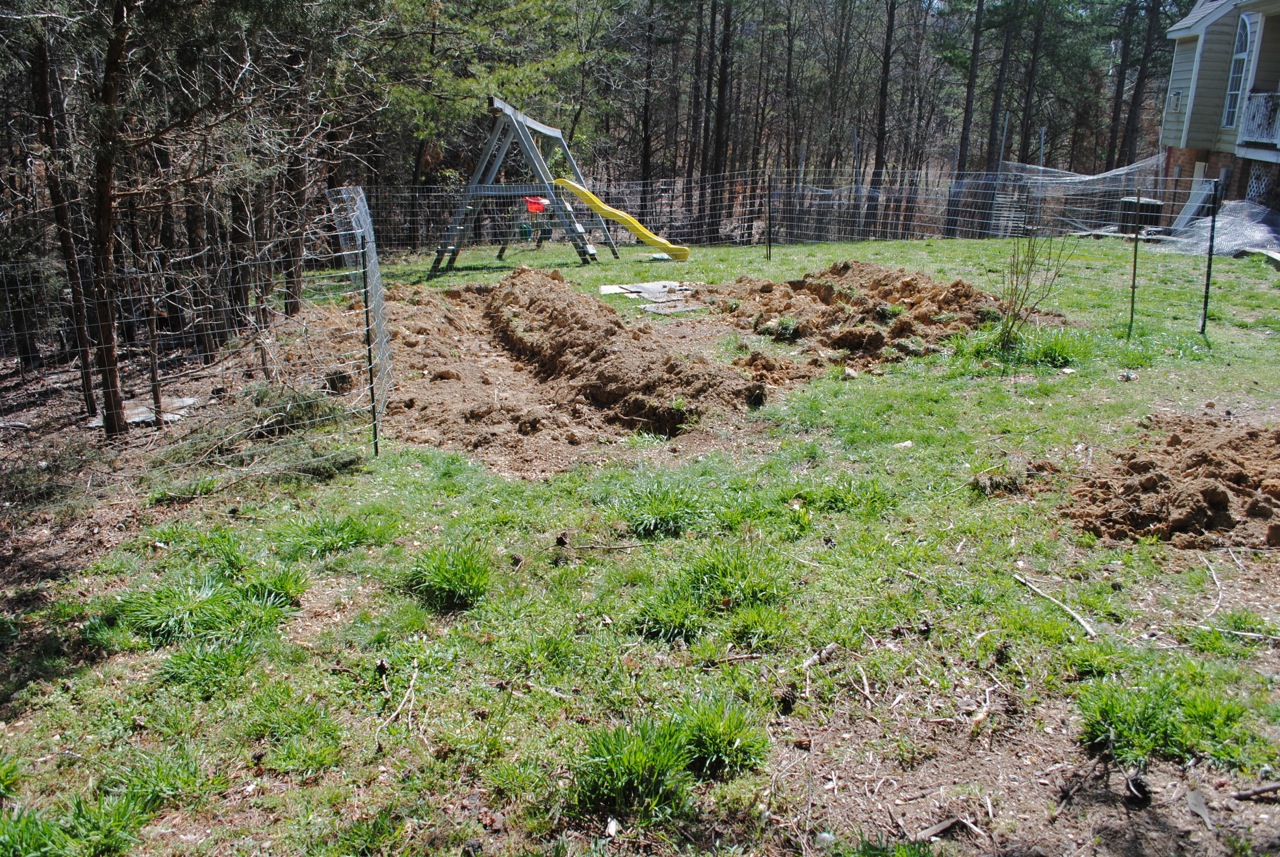
I decided I wanted rows of raised beds in this garden because I’ve lost so many plants over the years due to excessive moisture pooling at the roots. In a slightly rounded and raised bed the excess runs down the sides and away.
To do that, I started digging furrows, or trenches. I probably made them too wide and too deep (stubborn digging without a plan isn’t the best idea) but there are now 5 long raised beds out there. They still need to be tilled, since the dirt is nearly solid clay. Thankfully I still have a whole shed full of composted llama and goat poo to mix in. Still, I am concerned I may need to order up some dirt due to the extremely poor quality of the soil I dug out of our ground.
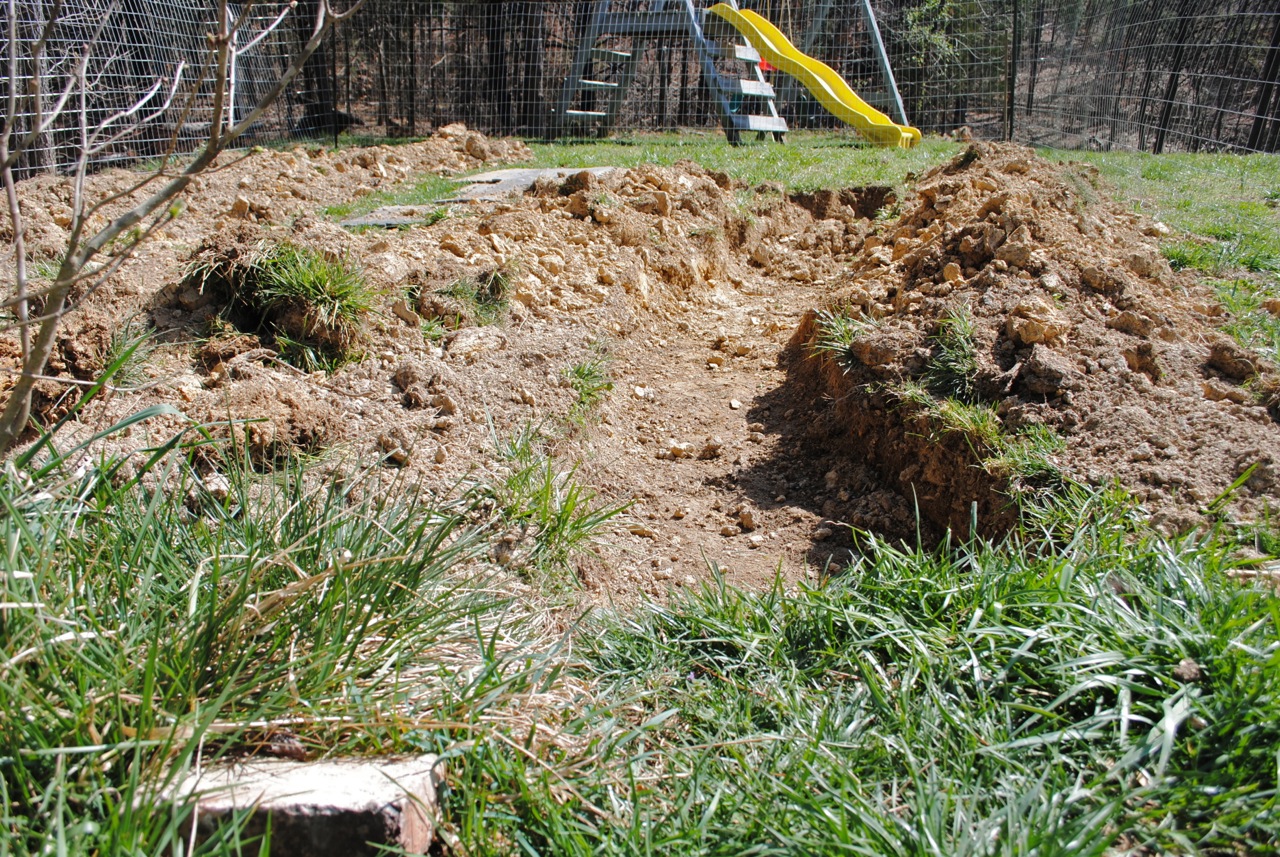
The clay is so hard I had to use a mattock to break it up.
There’s space in the shadier back – side of the garden for the bees to go so they have free access to keep our plantings pollinated.
Soon the onions will go into the ground along with the beets and once they are ready, all of the vegetable seedlings that are currently germinating in the dining room.
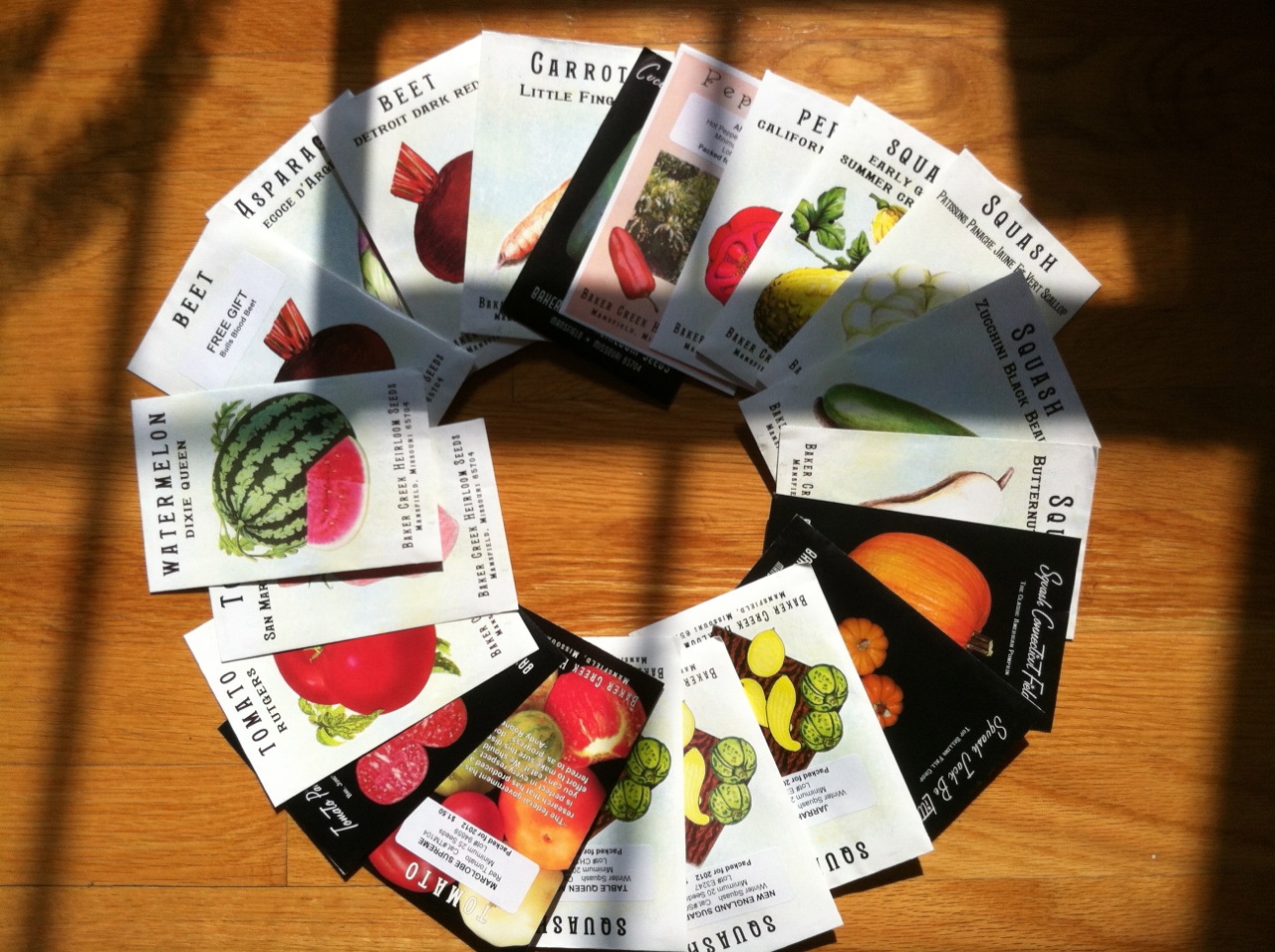
This is not nearly as impressive as Caroline’s seed selection! But this represents about 2/3 of what we are planting this year. I’ve ordered onions, seed potatoes, and blueberry and raspberry bushes as well. Come fall we’ll do another crop of late summer vegetables and some things to overwinter.
The biggest challenge in all of this?
This:

Keeping these insatiable scratching and digging and eating machines out of the garden. I’ve got the woven wire up: I just need a gate. Paul has a friend coming out to plan out the logistical part of clearing our wooded acres here and fencing it all in. Hopefully giving the poultry a wider ranging area will make the vegetable patch less of a lure for them.
Hopefully by fall you’ll be hearing me say how sick I am of preserving so many fresh veggies!
Remember that quilt top I was working on with Caroline when Lizzy House was at Susan’s?
I finished it.
Just the top. But it’s beyond gorgeous.
I don’t have any wall space where I can hang it for a proper picture right now, so bear with me. This is just a peek. The color is off and I realized it’s also upside – down.

More details and better pics to come.
For now I am back out to digging garden trenches.
This is the post where I steal an entire bit from Susan’s blog and pass it on here. She and the crew at JMF are starting magazine. A beautiful, lovely, useful magazine centered around all things done by hand. Cooking, sewing, knitting, building…..you name it. I’m super excited about it (and having a hard time not boasting that I’ve known about it for quite awhile and have seen some of what’s going to go into it…..it’s too exciting to keep to myself!). Here it is in Susan’s words. There’s some lovely prizes to be had for those who can help get it off the ground.
Very Big News!
by Susan on March 2, 2012
So for months now I have been alluding to a big secret I’ve been keeping. I am thrilled that today I can finally share the news with all of you.
Juniper Moon Farm is starting a magazine called By Hand. By Hand will be a lifestyle magazine for people who make, with departments for cooking, crafting, DIY, gardening, and do-gooding, with a bit of travel and profiles of makers every month.

The idea is to celebrate creating things with our hands, and to explore the motivation to make things in a world where there are cheaper and immediate alternatives. It will be both practical (patterns, DIY projects, etc) and thoughtful, with a lovely and gentle aesthetic.
We have lots of amazing contributors and editors on board already, and the first issue is well underway. But before we go any further, we need your help!
We are holding a Kickstarter campaign to raise the rest of the money we need to make the magazine everything we want it to be. And as an added inducement, we have commissioned so amazing rewards! Our art director Michelle Lukezic has designed posters and t-shirts that are going to be incredibly popular with people who make things with their hands. Here’s a sample:

There are posters and t-shirts for each of the sections in the magazine!
If you like what you see and want to support us, great! If you can help us get the word out about the Kickstarter and the magazine we will be forever in your debt!
What’s going on right now:
What are you up to this week????
Normally I wouldn’t give up on winter so soon. After all, where I grew up, March was blizzard season. Even here in Virginia we’ve had more than a few surprise March snowstorms; at least of those was nearly record – breaking. However, given the incredibly mild weather we’ve had since fall I think it’s not foolish to expect winter is done. Perhaps we’ll have another blow-out – who knows? But I am not holding my breath. Not when in the same week we’ve had several inches of snow followed by nearly 80 degree temperatures three days later.
So, over the course of the week we’ll be washing and packing away the heavier winter items and changing out our winter decor for spring.
Yes, I change the art on the walls along with the sheets, the pillows and the blankets to coordinate with the seasons. It’s easier than a re-doing your furniture every time you get sick of where it all is.


It’s hard to believe I took all of these pictures not eve a full week ago, considering a few days ago we were outside like this:

I gave in and planted some of the cold crops: beans, peas, arugula, Black Seeded Lettuce, and Red Romaine. I’m afraid if I wait for the normal planting date it will be too warm.
Spring cleaning, here we come.
This weather here is crazy, y’all. Two days ago there was snow and ice (well for us, crappy rain. For people a mile up the road and points north, snow. For all of us, ice overnight). We were shivering in our beds from the cold.
Today it’s been practically t-shirt weather. And since a lot of the eggs Emily has been bringing in from the coop have been dirty, I decided I’d use the warm weather to see how coop winterization was faring.
NOT GOOD.
People take care of their chicken coops a lot of different ways. Some people use hay or straw, some people use pine or hardwood mulch. I’ve even heard of people using grass clippings. Personally, I like to use pine shavings. They’re nice and fluffy and comfortable for the chickens’ feet, and they do a great job at drying out all the many droppings that chickens leave behind them and absorbing extra moisture and odor. I’ve used hay and straw but find that the poop doesn’t get dried out at all and the hay doesn’t break down as easily. If you’re going to use hay or straw, you’ll need to clean it all out more frequently. As for grass clippings….I imagine it would be like the hay but even less absorbent. The last thing you want is a moist coop to harbor bacteria and parasites. You’re going to have those anyway, but you don’t need to put out a welcome mat (and you don’t want to chance introducing any droppings from wild birds that might be on that grass).
Anyway, pine or hardwood shavings. You don’t want to use cedar because the aromatic oils are bad for the birds. I really wish that wasn’t the case, because my coops would smell SO much better.
I do a thorough cleaning out of the coop twice a year, in the spring and the fall. At those times I’ll completely remove all bedding materials and the leave the doors all open for a few hours to air it out well. If you’ve had a bad time with parasites or illness this is the time when you also want to scrub the surfaces a bit with some hot water and dish soap. You can bleach it if you’re so inclined, but be careful to dry it out completely and remove any residue before the chickens go back in.
Personally, I like the method that Zac over at Juniper Moon Farm used this past spring after a bout with mites. He used a propane – fueled weed burning tool (read: flame thrower!) and lightly charred the entire inside of the coop.
Anyway, once the coop is aired and dried out I dust it down with Poultry Dust. This is an insecticide powder to ward off lice and mites. Then I add the pine bedding and let the chickens back in to mess it all up.
Like I said, unless we are having an infestation of some sort or there is some major illness afoot, I only do this twice a year. The bedding and the poop break down together and whenever it’s looking more “muddy” than “piney” in there I’ll throw a layer of more pine on top. The composting of the under layer of poop and pine creates some heat and insulation during the winter that helps keep them warm. In the summer, it breaks down a lot faster with the heat and I replace bedding a lot more often.
But back to today. Today I intended to check the bedding and add some fresh stuff on top. That’s not what happened.
The winter this year has been very mild and very, very, very wet. The chickens are spending more time inside trying to stay dry and therefore pooping a whole lot more inside. It hasn’t been cold enough to keep the waste in any kind of deep freeze, and it’s been just cold and wet enough to keep everything gross and damp. No drying. Not breaking down as fast. Gross.
Today I cleaned out the coop.
The good news is that all the “muddy” compost I shoveled out can be used as……. compost. I chucked it all over the area that will be the garden this spring.
And while I was at it I spent time listening to the chickens, observing their behavior and taking stock of their general health and well – being.

Speckles – our Egyptian Fayoumi – just started laying for us. We’re getting the cutest little cream – colored eggs from her. And it took her long enough – she’ll be a year old in about a month and a half.

Miss Harriett, a pretty black Cochin.

Roobert, the resident jack-ass. He likes to attack boots.
ETA: Emily and I have been calling him “Mad – Eye” because he lost an eye a few years back, and that’s when the bad behavior started. Nothing worse than a grumpy one eyed rooster.

This handsome boy was one of the batch we hatched out in August. He’s called “Tevye” and he’s a bit off a mutt.

One of Speckle’s adorable little eggs next to a normal – sized egg.
And speaking of eggs: last summer our hens were on strike. Nobody was laying. For months we were in an egg drought. I couldn’t figure it out. I treated them for every possible ailment, checked thoroughly for any and all problems.
We’re pretty sure they were all in a slow molt. Nobody looked bald or shabby, but there were a whole lot more airborn feathers than usual. So this fall we installed a light into the back coop so that once the molt was over they wouldn’t go immediately into winter mode. ( chickens stop laying in the winter due to loss of daylight, not the cold temperatures. Increase their light, and they won’t stop laying)
Now it’s January and we are overloaded with eggs.
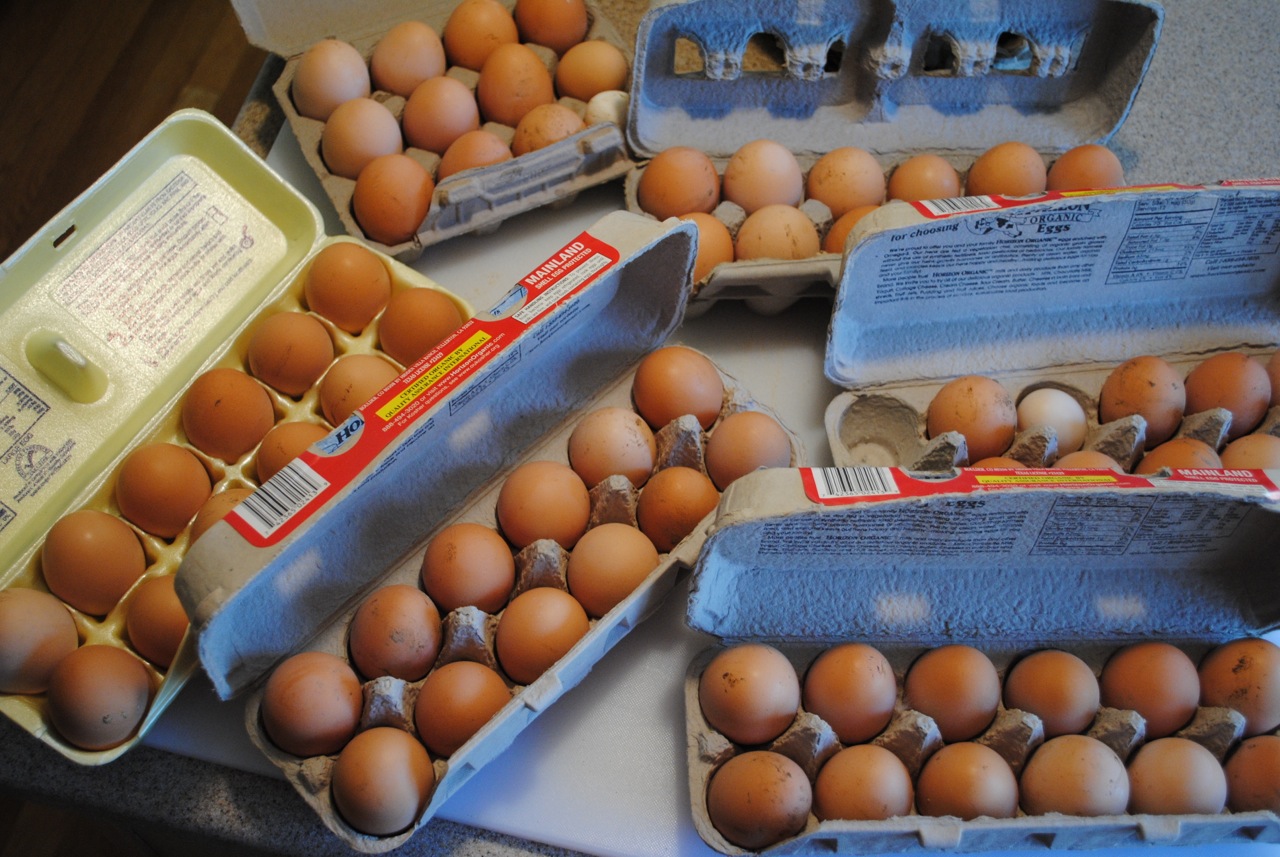
There are no fewer than 6 dozen eggs in my fridge at this very moment, and we haven’t collected yet today.
Anybody want an omelet?
 Merry Magpie Farm