You are currently browsing the tag archive for the ‘food’ tag.

Although we are not technically on summer vacation yet, we still tried to enjoy the first official weekend of summer to its fullest.

Happy Memorial Day, everyone!

Today I gave the kids a break from math and spelling, packed them into the car and drove an hour away for our yearly spring tradition – cherry picking!

It’s a beautiful drive out to the mountains and the girls oohed and aahhed at all the big old historic estates in Albemarle County that we passed on the way.

It’s perfect timing, too, because we just ran out of our last jar of Brandied Cherry Jam that I made last year. And, like last year, we picked waaaaaaaaay more than planned.

In all, we came home with just under 20 pounds of cherries.  At $3.99 a pound…….you do the math.  Every year it’s the same.  We plan to not spend too much, and we pick too many.  I gripe about it as I am paying for them, I gripe about it all the way home.  I gripe about it as I stand and wash them for what seems like hours.

Then, after we’ve eaten our fill and I am planning out what to make with them I always say “We didn’t pick enough cherries!”

I washed, de-stemmed, and packed into ziploc freezer bags about 13 pounds of cherries.  They’re dead easy to freeze, and this way I don’t have to make jam right this second.  I am, in fact, waiting until I can order some Weck jars this year.

Because Weck jars are prettier that’s why.  And yes, they are ALL going to become jam.

It was THAT good.


Right now the garden is bursting with all manner of leafy greens.  Lettuces, kale, spinach.  Even the beet greens are beginning to cry for picking.  SO many greens, so little time!

This week we are still enjoying an overabundance of kale but also we are able to mix things up with the spinach that is beginning to take over.  I am rather fond of spinach myself: for all my talk of loving growing and picking kale, I think I may actually prefer the spinach!  There’s an unending variety of things you can do with spinach: soups, dips, Spanakopita!  I like to use fresh spinach in place of shredded lettuce in my tacos.  It does well in a regular ol’ salad, and even better in one with strawberries!

This week I made my go -to dish for any vegetable for which I have too much: risotto.   I am a sucker for risottos of all kinds, but my favorite is just a simple white wine and parmesan, plain – as – they- come risotto with some chopped up and sauteed veg thrown in.

To start I gathered a large bunch of spinach from the garden – around the same size as those bundles you see in the produce section of the supermarket.  They weigh probably around a pound. It looks like too much, but it cooks down and reduces A LOT.

I like to thoroughly wash my greens, and not because they are dirty.  In fact, I am completely sure the greens from my garden are far cleaner than those that have been picked in some other state, loaded onto a truck, driven for miles and miles, loaded onto display and handled by various shoppers.

I clean each leaf because of this:

I don’t want to eat bug litter.  You know, if a few little bugs escape my notice and get cooked up, so be it.  But wads of webbing? No thank you.  A hidden chrysalis?  Even worse.  But worst of all, this bit of webbing could (and did) conceal this:

Yeah, you’d notice that big guy in your finished meal.

(The risotto I make is pretty common, and a good, detailed recipe can be found HERE.)

So – I thoroughly wash my spinach, and then chop it up with half a yellow onion.

I saute the onion and some garlic in a bit of olive oil until the onion starts to become translucent, and then I add the spinach.

I don’t want to cook the spinach too long – just long enough to wilt it a bit and reduce it somewhat – then I remove it from the heat and transfer the onions and spinach to a warm plate.  You don’t want to leave the vegetables in for the entire cooking time or they will overcook and lose a lot of their texture and character. We’ll throw them back in at the end.

Meanwhile, I have a pan of vegetable or chicken stock simmering on the stove on low heat, waiting for its turn to be added to the pot. You want it to be hot when it is added to the rice or it will slow down your cooking time dramatically.

You can use either kind of stock for this recipe – I prefer the richness of the chicken stock, but since my oldest is a vegetarian I tend to use vegetable stock whenever I can.


Next I add a touch more olive oil to the pan that the spinach has just vacated and I add the dry, uncooked rice.  The idea is to get it coated in oil and saute it for about 3 or 4 minutes – until it starts to become translucent-ish.  Then I give it a good splash of white wine.  I tend to be generous here.

Here’s the thing about wine in cooking: I don’t use “cooking wine”.  I use straight up, run of the mill, whatever’s on sale wine.  I cook with wine fairly frequently so I always keep a couple of bottles of cheap whites and reds around.  You don’t have to be as picky with it as you would if you were going to drink it (although sometimes even that super cheap stuff can be very drinkable!).

Once the wine has mostly been absorbed into the rice you can start adding a bit of the simmering broth, a little at a time, waiting for it to be almost all absorbed before adding more.

It should take around a half an hour to use up all of your stock and for the rice to become soft.  It will start to look almost creamy, and then you know you are ready to finish it up.

At this point you’ll throw your spinach and onions back in along with some parmesan cheese, salt and pepper.  Honestly, I tend to add extra parmesan and leave out the salt.  If you wanted to you could throw in some steamed and chopped asparagus at this point as well.  Artichokes also make a nice addition.  Okay,  I am making myself very very hungry right now.

Once everything is mixed in and heated through you are ready to serve.

A nice and simple risotto like this can make a fine meal all on its own.  Or you can add a fried egg with a runny yolk right on top and make it extra special!

All of our hard work creating the chicken prison?

The foxes (or foxen, as Jenny Lawson hilariously calls them) laughed at us.

This past Tuesday we awoke to fresh carnage.  Something had obviously made a grab at the chickens as they slept on the perches (which were long sticks hanging in the corner of the chicken prison).  You could tell by the feathers all stuck to the wire at that spot.

Then that same something dug under the wire and crawled under the two feet it extended along the ground into the prison.  This was also the point where it dragged out Prim, as evidenced by all of her feathers left behind:

Everyone else was present and accounted for, but unfortunately Fleur was badly hurt.  At first I thought she was just a bit torn open under her wing, and sprayed her with Blue Kote thinking she’d be fine, since Tevye had similar wounds after his foxen encounter.

Then we noticed under neck.  And down into her breast.  All. Torn. Open.  Her crop was even torn open.  You could see her dinner still in it, dropping out in clumps whenever she’d move.  Not something Blue Kote was going to fix.

I told Emily things didn’t look good and we should keep her comfortable as best we could until…..you know.

Emily didn’t take it well.  SHe sat in the garage with Fleur and cried as Paul and I tried to figure out what the #$*% to do next (the chicken proceeded to poop all over Emily AND lay an egg on her).

First off: no sleeping perched in the corners.  Second: secure the ground wire better.

Paul wanted to line the entire ground area with wire so nothing could tunnel in.  I was worried about the chickens not being able to scratch the dirt if we did that.

While he brainstormed that, I looked up “torn hen crop”on the internet.  Turns out, incredibly, it is totally survivable.  With surgery.

Crap.

Because you know I had to give this hen a fighting chance at least.

In related news: can you believe most pharmacies do NOT carry dissolving sutures?  In fact, every pharmacy I called acted like I was looking for contraband.  I joked with the nurse at the local doctor’s office later that it’s like they thought I was doing open – heart surgery on my four year old.

I managed to get some dissolving sutures from the local dentist (shout out here to Dr. Mera – thank you for helping me save my chicken. You are my daughter’s hero!).

Then EMily and I went to work.

Blindly.  Completely, “I have no idea how to do what I am doing” blindly.  All I knew is her crop needed to be sewn shut, and it was now or never.

No, I did not take pictures.

Emily held her while I used a lot of saline to clean it out, sewed up what I thought needed to be sewn, stitched her breast skin back together, sprayed a shit – ton of antibacterial wound spray on her, gave her antibiotics, and set her up in a clean space in the garage.

That was Tuesday.

This is today:

She is still eating, drinking and pooping (which I hope means I didn’t actually sew her crop completely wrong, thereby preventing the food from ever leaving it) but she is not making much effort to leave the box .  My guess is having your chest stitched back together without anesthetic makes you pretty damn sore and you don’t want to move much afterwards.  The skin at least does not look puffy or swollen, and it looks to be healing over.

She also gets upset when she sees the neighbor’s outdoor cat wandering around (the cat has adopted us, apparently, and has no interest in chickens) and she bawks madly, puffing up and pacing around frantically.  She has also started fighting me when I go to give her her antibiotics.  I think she may actually make it.

As for the prison – Paul decided yes on the welded wire covering the ground, except at the very center.  Where he made them a sandbox to scratch in.  Then he built a frame for perches over top of it.

I am not saying nothing will get in.  I will not tempt fate again.   I also don’t know if I will ever be able to free – range them again either.  Which is sad, because i will miss those dark orange yolks from all the grass.

They come at too steep a price, though.


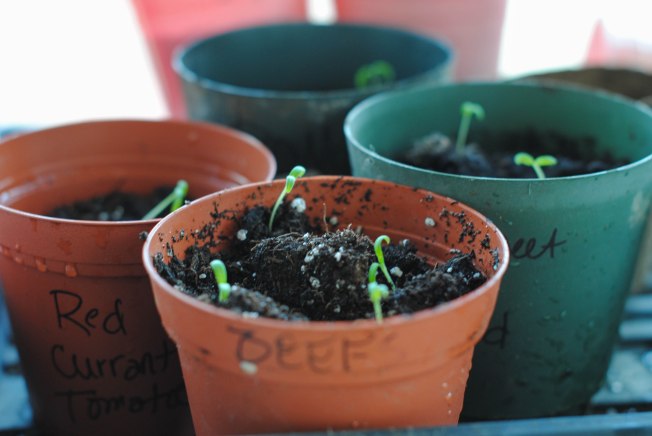
While the tomatoes all languish in the house (outgrowing their pots by leaps and bounds) waiting for it to warm the heck up, the cold – weather crops are all coming in like crazy.

The beans and peas are starting to climb the wire trellis and I hope soon we’ll see some actual pods.

The lettuces (Black Seeded Simpson and Red Romaine) are all just about ready to be picked for salads, and the spinach is not far behind.

The broccoli is getting nice and leafy and I am waiting impatiently to see the flowery part!

Then there is the kale.  It is screaming for attention and picking right now – growing head and shoulders above everything else.  I wasn’t planning on making anything kale – related for dinner tonight, and it’s not very tall yet – but it is very crowded so I decided the time was about right to pick some of the tender leaves for making kale chips.

Kale is one of those greens that is very at home in a potato or ham – based soup – it is very sturdy and flavorful without being too overpowering (it is actually a part of the cabbage family).  It is also very good for you – being high in beta carotene, vitamin K, vitamin C and even calcium!
Kale chips can be made with large, fully – grown kale leaves, but I like to make them with the more tender, smaller leaves.  If you use big kale leaves, you’ll need to remove the stems and the ribs to make the chips.  With the small, baby leaves it’s not really necessary.

Preheat your oven to 300 degrees and wash your kale.  I just give mine a quick rinse if I’ve just pulled it from the garden – really all I am worried about is that we don’t end up eating too many hidden little bugs or spiders!
Lay your kale in a single layer on a cookie sheet either coated with cooking spray or with foil.

Drizzle some olive oil and salt and pepper to taste.  I also like to splash some vinegar on them – like salt & vinegar chips (malt vinegar is best, but just about any will work)!
Bake for about 20 to 25 minutes or until they are nice and dark and crispy.

They will come out like this – all nice and blurry!

Oona and I hogged all of these up before anyone else even got wind they were done.  They were yummy!

I’m the type of person that likes traditions.  The more the better!  And if there isn’t a tradition for something, you can be sure I’ll do my best to start one.

The last few years I’ve been making omelets for breakfast each Easter. We don’t really celebrate Easter beyond the bunny and an occasional family gathering, but with all that candy going on first thing in the morning, and with it being spring and the chickens swamping us with eggs……you can see where it was just a natural progression.

The thing is, and I don’t like to brag – especially about myself – I make a pretty mean omelet.

My grandmother – you know, the one who was the head chef at her own restaurant for over twenty years? She took me into the kitchen one day when I was young and taught me to make omelets.  I remember she and my grandfather even took me out and bought me my own omelet pan at the restaurant supply store once I’d mastered it.

I’ve been making omelets almost exactly as she taught me ever since. And now I am going to share it with you.

First, crack a few eggs into a large bowl.  The general rule is two to three eggs per person.  I personally like a two egger – if I am making it for Paul it’s a three.  If I am filling it with loads of extras, two is usually best.

To my eggs I like to add salt and pepper and some dill.  I’ll always add fresh chopped basil if I have it, or dried if I don’t.

Then whisk it up good.

Next you can decide what else to put in your omelet.

Cheese? Excellent.  Make sure you have some grated or shredded cheese at the ready.  I like to chop up mushrooms, tomatoes, green peppers and red onions as well.  Sometimes I like to be different and do sun dried tomatoes with marinated artichokes and goat cheese.  Be creative – meats are good, as are all kinds of cheeses and veg.  Whatever you want, prepare it ahead of time so it’s ready to toss in.  This Sunday I used shredded cheddar, green peppers, onions, sun – dried tomatoes and mushrooms.


Meanwhile prepare your pan.  I use a non – stick skillet generously coated with Pam.  This is where my technique differs from my grandmother, who uses a seasoned omelet-only pan with no spray. I like the ease of my eggs sliding right out when I want them to.

You want a medium-ish heat.  Not too hot; you don’t want the eggs to sizzle when they hit the pan.  You will need them to cook evenly and gently.

Pour your eggs in the pan.  After a minute or two the bottom will start to cook a bit.  You want to lift one side of the pan off the heat now and scrape everything down to the side on the heat.  Then, holding the cooked bits back with your spatula, rock the pan the other way so the fluidy bits of egg run down into the side you’ve just scraped.

Believe me it is hard to take pictures of yourself doing this!

Always let the runny parts pool down into the side of the pan touching the heat.

Scrape the cooked bits down just before you move that side back down onto the heat.

It’s not very tricky; you just want to maximize the amount of heat the runny parts get while minimizing the heat onto the cooked parts.  This way none of it gets overcooked and hopefully nothing gets undercooked either (it helps to use fresh-that-day eggs if you are worried about undercooking!).

You want to keep this up until about 60 to 70 percent of the eggs are cooked.  You need enough runny egg left to hold it all together when you lay the pan flat again.

Now’s the time to toss in your extras.

At this point, if I think the eggs look a bit too runny or if there is an awful lot of cheese to melt, I will put a lid on the pan and let it cook until almost completely firm.

But – here’s the trick – you don’t want it 100% cooked just yet, because you need it to remain a bit flexible to fold it.

You’ll carefully fit your spatula under one half of your omelet, lift it,  and gently fold it in half.

This is where you’ll let it finish cooking, if it isn’t already done.

Et voila!  Delectable omelet for you!


If you’re a farmer (even a small – scale one) you’ll know that spring is the busiest time of the year.  Garden patches need tilling, seeds need to be started, coops and run – ins need to be cleaned and aired out for summer, and baby animals need to be prepared for.  This year I have felt the busy-ness and anxiety more acutely because we’ve had one of the warmest Marches on record.  The bugs have exploded in population and things are sprouting and blooming well in advance of normal.

One of the things keeping me busy (and exhausted) is my new vegetable garden project.  I’ve mentioned before I fenced in a plot out front that’s just under 1,000 square feet.  Since we have really terrible soil, and since I’ve had issues in the past with too much moisture pooling around the root systems of my plants, I’ve followed the example of Juniper Moon Farm and made raised bed rows to plant in this year.  They are raised and rounded so that excess moisture flows off.  I have 5 long raised beds to plant in now, thanks  to weeks of digging, a load of compost, and a day of tilling.

Right now there are three kinds of onions, Rainbow Chard, two kinds of beets and little finger carrots sprouting out there.

An onion peeking through the straw mulch.

Now that it is April things are getting a little more exciting because it means it is almost our safe window for planting the seedlings we started indoors, such as our tomatoes, squash and herbs.

They’ve had a nice sunny spot in the house waiting to be garden – ready.  Soon we’ll be receiving blueberry and raspberry plants that I ordered along with sweet potato and purple potato plants.

If all of this isn’t enough, we’ve got plans for a honeybee hive this spring to help pollinate our plants and increase our vegetable yields, and we have landscapers coming out next week to start clearing our woods for fencing. The goat shed is slowly being cleaned out to be ready for its once and future occupants.

The chickens are in full egg – laying mode and we are seeing about 2 dozen eggs a day now. I’ve been giving eggs away to anyone who’ll take them and even sending dozens off to two local restaurants, and I am still drowning in them.  I am thinking I will make a bunch of freezable quiches and cookie doughs one of these days to use up some of the surplus.

Unfortunately we won’t have fresh goat milk this summer – Milkshakes aborted her babies.  It turns out she had in fact been bred by the sheep in the fall and was therefore unable to carry the pregnancy.  They were tiny, amorphous blobby things that were never meant to live.  As I said, goat/sheep crosses aren’t viable.

Most likely I will try to breed her again this fall, for babies and milk next spring.

As you can see it is very busy outside right now in preparation for summer.  Once the hot weather hits I hope to be able to spend some time indoors fixing the wallpaper Oona destroyed and touching up paint and other things we’ve been neglecting.  But let’s hope the hot doesn’t come around too soon.

Happy first day of spring!  I may not be a fan of summer or very-warm weather, but I just adore spring.  My sinuses aren’t too thrilled, but that’s another story.

This first of spring is even more exciting and special for me because I am finally seeing the ideas and desires I have held for so long come to fruition.  Especially with regards to the new garden.

I’d been wanting to move the vegetable patch closer to the house and make it bigger (with room for a beehive) and so a few weeks back I got outside and started making it happen.  I pushed the kids’ giant wooden swingset about 15 feet from where it was (by myself! And yet I wonder why my neck and shoulder is bothering me so much lately??) and started staking out the outline for fencing.

Then I got to work digging.  By hand.  Again, by myself.

I’d had the idea that we really needed to move things along if I was going to get the early spring seeds and bulbs into the ground.  Our only machinery with a tiller attachment is currently down (and ancient).  I didn’t have the funds to hire someone to come with a big tractor, so I grabbed a shovel and went to it.  The finished area is just under 1,000 square feet.

I decided I wanted rows of raised beds in this garden because I’ve lost so many plants over the years due to excessive moisture pooling at the roots.  In a slightly rounded and raised bed the excess runs down the sides and away.

To do that, I started digging furrows, or trenches.  I probably made them too wide and too deep (stubborn digging without a plan isn’t the best idea) but there are now 5 long raised beds out there.  They still need to be tilled, since the dirt is nearly solid clay.  Thankfully I still have a whole shed full of composted llama and goat poo to mix in.  Still, I am concerned I may need to order up some dirt due to the extremely poor quality of the soil I dug out of our ground.

The clay is so hard I had to use a mattock to break it up.

There’s space in the shadier back – side of the garden for the bees to go so they have free access to keep our plantings pollinated.

Soon the onions will go into the ground along with the beets and once they are ready, all of the vegetable seedlings that are currently germinating in the dining room.

This is not nearly as impressive as Caroline’s seed selection!  But this represents about 2/3 of what we are planting this year.  I’ve ordered onions, seed potatoes,  and blueberry and raspberry bushes as well.  Come fall we’ll do another crop of late summer vegetables and some things to overwinter.

The biggest challenge in all of this?

This:

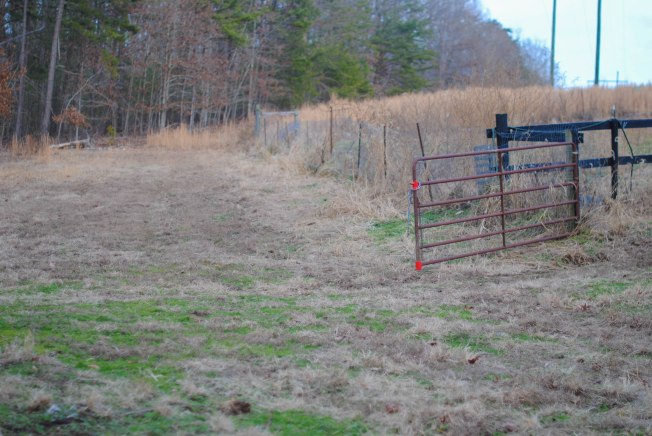
Keeping these insatiable scratching and digging and eating machines out of the garden.  I’ve got the woven wire up: I just need a gate.  Paul has a friend coming out to plan out the logistical part of clearing our wooded acres here and fencing it all in.  Hopefully giving the poultry a wider ranging area will make the vegetable patch less of a lure for them.

Hopefully by fall you’ll be hearing me say how sick I am of preserving so many fresh veggies!

Happy Saint Patrick’s Day!

As you may or may not know, St. Patrick’s Day is our wedding anniversary.  This year was number 16 – and we celebrated the way we always do: with good food, cold Guinness, and watching Darby O’Gill and the Little People together.  Maddie made a lovely Chocolate Stout Cake with Bailey’s Cream Cheese frosting, and I made Jamie Oliver’s Steak, Guinness & Cheese Pie (from Jamie At Home).  I made fresh granola and played with my new Janome sewing machine,  and Paul brought home his new toy: a giant trailer.

There’s no real recipe at play here: I just toss some oats, sesame seeds, coconut & sliced almonds with some dried blueberries, some honey, some maple syrup and canola oil and bake it lightly.

Truffles and Speckles fighting over a nesting box.  Neither one would cede to the other, and they ended up both laying their eggs at the same time.

No, I don’t particularly like “Hello Kitty”.  The machine just happened to be  branded that way and it was a steal.

Paul’s new toy.

What do you mean I can’t have this marshmallow Oona dropped that’s bigger than my head??!!

This is the post where I steal an entire bit from Susan’s blog and pass it on here.  She and the crew at JMF are starting  magazine.  A beautiful, lovely, useful magazine centered around all things done by hand.  Cooking, sewing, knitting, building…..you name it.  I’m super excited about it (and having a hard time not boasting that I’ve known about it for quite awhile and have seen some of what’s going to go into it…..it’s too exciting to keep to myself!).  Here it is in Susan’s words. There’s some lovely prizes to be had for those who can help get it off the ground.

Very Big News!

by Susan on March 2, 2012

So for months now I have been alluding to a big secret I’ve been keeping. I am thrilled that today I can finally share the news with all of you.

Juniper Moon Farm is starting a magazine called By Hand. By Hand will be a lifestyle magazine for people who make, with departments for cooking, crafting, DIY, gardening, and do-gooding, with a bit of travel and profiles of makers every month.

The idea is to celebrate creating things with our hands, and to explore the motivation to make things in a world where there are cheaper and immediate alternatives. It will be both practical (patterns, DIY projects, etc) and thoughtful, with a lovely and gentle aesthetic.

We have lots of amazing contributors and editors on board already, and the first issue is well underway. But before we go any further, we need your help!

We are holding a Kickstarter campaign to raise the rest of the money we need to make the magazine everything we want it to be. And as an added inducement, we have commissioned so amazing rewards! Our art director Michelle Lukezic has designed posters and t-shirts that are going to be incredibly popular with people who make things with their hands. Here’s a sample:

There are posters and t-shirts for each of the sections in the magazine!

If you like what you see and want to support us, great! If you can help us get the word out about the Kickstarter and the magazine we will be forever in your debt!

Archives

Calendar

May 2012
M T W T F S S
« Apr    
 123456
78910111213
14151617181920
21222324252627
28293031  
Follow

Get every new post delivered to your Inbox.

Join 126 other followers